Showing posts with label nostalgia. Show all posts

6 May 2013

Nostalgia unbound

The strong feeling of nostalgia has passed - like all thoughts and feelings, but it will arise again and again. Silvestro Lega, is one painter who always triggers the specifically flavoured sensation:


The women he paints are so perfectly dissociated, there is this overwhelming solitude in the air...


Here is someone's "reenactment" of the scene:
<---
Someone has taken pretty assertive stance - below is a superbly captivating interpretation of another painting by the same artist.


Quadri vivendi, the original version:  
Wiki
 

The same scene reenacted, with the scene from the painting inserted as a graphic banner.


I don't know who the artist/photographer is but it is cool fun.


The reenactments come from a super interesting Italian blog: http://artepignato.blogspot.ca/2010/09/quadri-viventi-di-silvestro-lega.html

4 May 2013

Nostalgia - the Looking Out

Recently, again I have been experiencing "bouts" of nostalgia.
A state that has been quintessentially attributed to the mind of an immigrant - the longing for the homeland, the longing for "things lost", things of the past, all this.
In any event, it is a "noble aroma" that evokes strong feelings so prevailing in the art of certain periods. Notably the mid- and second part of the 19th century.
The Late Romanticism, in Northern Europe, the Baltic region, but also strongly in Italy and France.
You know what I mean?
Here is a bit of the sweet aroma, the stillness of Nostalgia - looking out the window, trying to break through the stale and the claustrophobic.
The LONGING for the Safe and the Familiar:

Constant Moyaux
I've added the promised captions!

For a number of days I am forced
to fight less to save the world.
For a while I need to save my own butt...


Johan Christian Dahl

Hans Olaf Heyerdahl

Jan Vermeer

Vilhelm Hammershoi - Bedroom

Woman at a Window Caspar David Friedrich

Salvador Dali

22 Feb 2013

Nostalgia vs Melancholy, Funerary Art

Will we enter the new era of Nostalgia? Or, perhaps another period of it, or maybe we have never been without it? Are we amidst such period?

In 2008 Vienna Museum featured hugely successful showcase of Vanitas in art. What would I give for the catalogue of it....

Favourite symbols beaming from the canvases
asking the question of Essential Melancholy:
In ictu oculi ("In the blink of an eye") a vanitas by Juan de Valdés Leal

Ubi sunt? 

¿Qué se fizo el rey don Juan?

Los infantes de Aragón
¿qué se fizieron?

¿Qué fue de tanto galán,

qué fue de tanta invención
como trujeron?


What became of King Don Juan?
The Princes of Aragon,
What became of all of them?
What of so much handsome nobility?


This canción relies on the motives of things of this world that are gone by, hence letting us that we may be next in line....

That's just what this is - Where are the flowers gone, from 1961.


18 Feb 2013

Discovery of Shabby Chic and Reclaimed

Somewhere in the older posts I have confessed that for a while I was suspecting myself of being a deviant, trying to isolate, building a suspicious museum of myself, filled with found or given objects and trying to evoke the climate of nostalgia for the era gone by...
But then - here is to the Internet - I noticed that it is not only me. I felt consoled and relieved.
I felt like poor Mr. Jourdain form The Bourgeois Gentleman who upon learning that he speak in prose and has been doing so for a long time feels adequate and so much closer to being an aristocrat!

So I  have been speaking Shabby Chic and Rustic and Reclaimed and all this without knowing it!
I am so relieved...


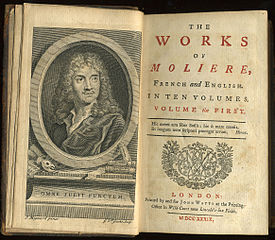
Here is some good Mr. Lully, who even set some music to Moliere's Le Bourgeois gentilhomme just to set us in a mood of French style...

1 Sept 2011

Nostalgia and the Lies of the Past

Like cars or buildings or computers, the images that shape the ways we see the world inevitably deteriorate and lose value. Spiritual entropy erodes them. To quote Neil Young quoting an ad of long ago, rust never sleeps.(...) From time to time it must be reviewed, a process that may require dubious cultural strategies.

This has been written by a senior and prominent Canadian journalist whom I respect very much, Robert Fulford. I have taken this quote from an essay of his published by an absolutely great Canadian publication - Queens Quarterly Review in the Spring issue, 2010.
Being a visual professional I am compelled to pay attention to the instruments of visual representation, as much as to everything else...
So my body heats up when reading the author's observations, commenting on the visual clichés, inevitable baggage of travel photography:

    "One day in 1953 (...) seeing Paris for the first time, I climbed 380 steps to the balustrade of Notre Dame Cathedral . There I took a photograph that managed to be both appallingly hackneyed and historically misguided. It has since been lost, fortunately, but I remember that it showed a gargoyle gazing over the rooftops of Paris.
Within the next day or two it became obvious to me that the image I had chosen was a ubiquitous  cliché in a city long notorious for visual clichés.
(...)
Years later it also became clear that my picture was taken under a false impression, the assumption (still shard by most visitors, apparently) that those gargoyles, being attached to a thirteenth-century Gothic cathedral, are therefore thirteenth-century gargoyles
(...) They are, in short, modern.
Installed in millions of imaginations by generations of photographers, they distribute a pervasive falsehood, the perfect stone embodiment of Voltaire's remark that history consists of lies on which we agree. They represent the often questionable role of nostalgia in or encounter with half-understood ancient buildings.
(...)
(...)
    In the middle of the nineteenth century Notre Dame was crumbling, approaching the status of a ruin. It was most famous for Victor Hugo's 1831 novel about Quasimodo, the hunchback. (...)
France spent a sizable fortune on the four-decade project of bringing Notre Dame back to life. Eugene Viollet-le-Duc, the principal architect (...) made Notre Dame into what he thought it should be not what it had been. Reverence for the past surrendered to the ego of the architect and the pride of a nation that would soon be seeing itself as the centre of the modern world.


I loved it!
Related Posts Plugin for WordPress, Blogger...